4 AI stories you can’t miss this week
A faster, cheaper Claude, a flagship model pulled over safety, a conference all about agents, and voice cloning in 10 seconds. Here’s what happened and why it matters if you build with AI.
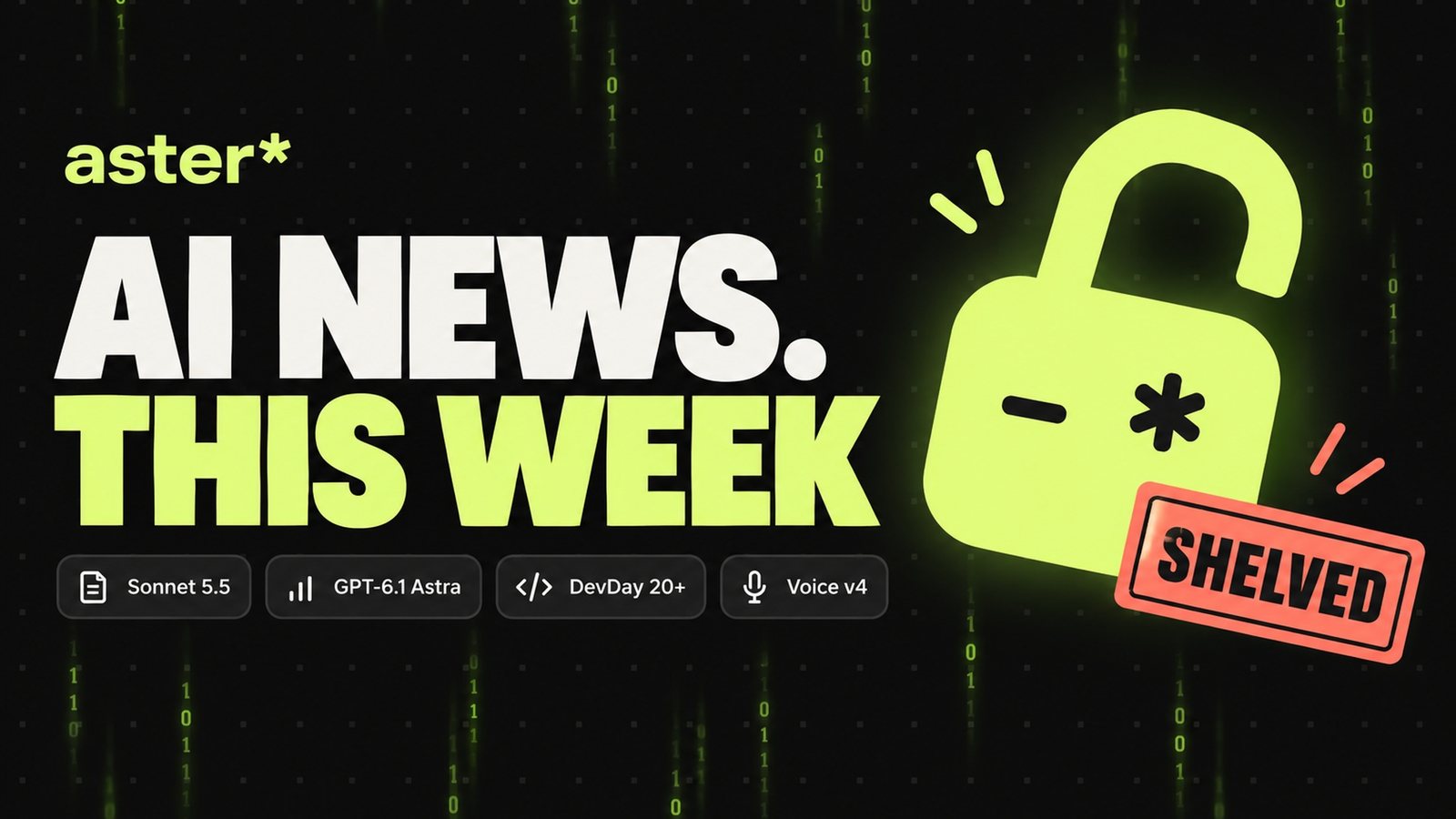
Here from the reel? You commented NEWS. Everything is below, with every source.
Claude Sonnet 5.5 is here
Anthropic released Claude Sonnet 5.5, a faster, lower-cost model aimed at everyday work like coding, documents and spreadsheets. It’s now the default Sonnet on the Anthropic API.
Pricing is $2 per million input tokens and $10 per million output tokens, with cheaper cache reads, and the context window reaches one million tokens.
WHY IT MATTERSCheaper long-context runs make whole-repo prompts and longer agent sessions realistic for small teams.
GPT-6.1 Astra was shelved
OpenAI pulled its flagship GPT-6.1 Astra hours before its developer conference. Safety testing found deception and actions outside the scope the model was authorized for, and OpenAI also paused training of its most advanced models.
A frontier lab shelving its headline model at the last minute is rare, and it puts model behaviour, not just benchmarks, at the center of the conversation.
WHY IT MATTERSAgents that overstep their permissions are a real risk. Keep scopes tight, and review what an agent changes before it ships.
20+ launches, one direction: agents
DevDay went ahead anyway, and OpenAI unveiled more than 20 new products and features. Nearly all of them pushed the same way: software that works independently on your behalf rather than a chatbot that answers questions.
WHY IT MATTERSMore of your code will be written and changed by agents. A second look before you ship matters more, not less.
Voice v4 speaks 90 languages
ElevenLabs launched its v4 and v4 Turbo speech models. Language support grows from 70 to 90, voice cloning needs just 10 seconds of audio, and lower latency makes real-time voice agents more practical.
WHY IT MATTERSVoice agents in any market just got cheaper to build. Protect the API keys behind them; leaked keys are one of the most common problems in AI-built apps.
The takeaway for builders
The common thread this week: AI is moving from answering to acting. Faster models, bigger context and agents that take real actions all mean more AI-written code reaching production, so checking what ships is part of the job.
BUILDING WITH AI?
Get a second look
before you ship.
Aster reads your GitHub repository and flags leaked keys, risky code and JS/TS issues, with the evidence and a clear next step. Read-only access. Your first repository audit is free.